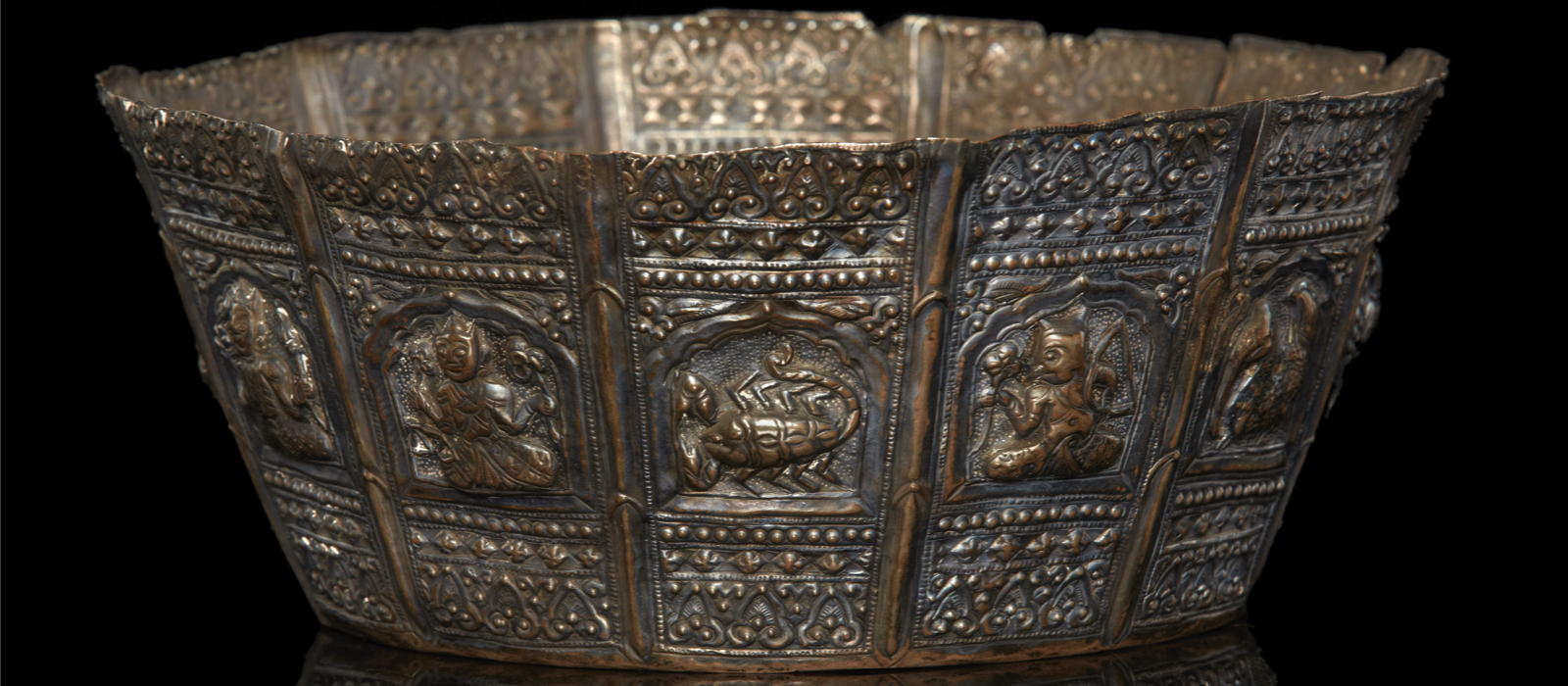
A Hymn to the Banished
Annalee Davis
A Hymn to the Banished explores connections between Scotland and Barbados through a newly commissioned artwork as part of the National Trust for Scotland’s ongoing mission to face the legacies of slavery and empire in its properties.
A Hymn to the Banished insinuates an interlacing of imperial linkages between Barbados and Scotland, inferring centuries of social disruption caused by the plantation system and the colonial project. With the forced transplantation of hundreds of thousands of enslaved African people and numerous Scottish, Irish, Welsh and English indentured labourers, systems of knowledge and rituals crossed the world’s ocean currents, building new cultures in the foreign lands of the West Indies.
British imperialism imposed banishment and generated suffering. Yet, deep knowledge and a desire to heal profound traumas elicited practices that relied on ancient traditions connected to the land and the remembering of sacred rites. Annalee Davis’s bespoke box lined with a fishnet captures and holds handmade books, a scroll of banished women, a container of charms, and other pieces. This limited edition explores notions of rupture, friction, entanglements, and the need to belong in strange places through rituals of incantations, charms, and the desire to repair the ills of British Empire-era indentureship and slavery.
A Hymn to the Banished is a secular prayer in the form of a visual meditation recognising the intuition, knowledge, customs, and tenacity of our forbears and their capacity to confront and survive cruel, brutal conditions.
sidereal. the afterimage
Selected works by Barbara Morton, Entropie Books
“sidereal. the afterimage is a new chapter of creative composition, and achieves an extension of intention and originality in the expression of poetry, book-making, drawing, and design. The accompanying pieces, demonstrate ambition and creative reach, both technically and imaginatively, and serve to maintain and develop an ongoing purpose of bringing poetry and poetic text to its aesthetic and accurate environment. To encourage the reader to look and to encourage the viewer to read. To look closely. To look again. To look for longer.”
Barbara Morton
Barbara Morton is a St Andrews-based author, artist, curator, and bookmaker. In 2014 she established Entropie Books to publish small editions of her poetry, literature, artist books, and pamphlets. Her artistic and literary practice incorporates the arts of poetry, printmaking, bookbinding, typography, papermaking, and
chine-collé to present her literary texts and abstract geometric drawings in an exact and deliberate visual form.
Her writing is published widely in national and international journals and anthologies, and her books and prints are exhibited throughout Scotland and beyond. She is the recipient of the prestigious Meffan Institute Purchase Prize for The Word Itself is a Musical Sound.
Scottish Objects of Encounter
Dr Emily Michelson
What does it mean to be Scottish? Scottish Objects of Encounter asks how we understand Scottishness, both today and when the University was first founded. It examines how national identity is also shaped by foreign objects, materials, techniques, and concepts.

Diversity and encounter have always contributed to Scottish identity and to its iconic objects – and the University of St Andrews has been part of this international exchange since its founding.
The University maces, expression of the University’s identity and history, also symbolise centuries of encounters with other cultures. From French influence on the Mace of the Faculty of Arts, through to the Greek influences in the making of the Six Centuries Mace – these works represent a steady tradition of global openness that has been ongoing for over half a millennium.
Including an interview with Greek master-silversmith and chaser Panos Kirkos, maker of the Six Centuries Mace, Scottish Objects of Encounter explores the hidden diversity of the University maces and history.
This exhibition is based on research by Emily Michelson and Alexandros Hatzikiriakos in the School of History. This project is supported by the Arts